
 by
by India’s hospitality landscape is evolving at a staggering pace — from boutique resorts tucked into serene hillsides to towering five-star hotels in business districts. But behind every full room and glowing guest review is an often underappreciated engine that drives sustained revenue: corporate sales. Having led portfolios across hotels, resorts, and branded experiences in tourism, I’ve seen first-hand how corporate sales is not just a revenue function — it’s the backbone of sustained occupancy, market relevance, and business resilience.
Over the years, I’ve had the opportunity to work across diverse markets and formats — from business hotels in metro cities to leisure resorts with hybrid business models. In this piece, I’m unpacking what works (and what doesn’t) when it comes to driving sustainable corporate revenue in Indian hospitality, based on hands-on learnings and what I’ve seen deliver results across brands, cities, and sales cycles. As a Hospitality Leader, I don’t just look at the top-line – I zoom in on market behaviour, segment performance, travel patterns, buyer psychology, channel optimisation, and cost of acquisition — because in this business, the devil lies in the detail.
Let me walk you through my strategic take on corporate sales in Indian hospitality and why, for decision-makers seeking someone to lead their top-line growth, I bring both the vision and the execution muscle.
Understanding Corporate Sales in Hospitality: A Panoramic View
At its core, corporate sales in hospitality encompasses:
- Hotel Corporate Sales: Business travel, long-stay contracts, conferences, events, loyalty tie-ups.
- Resort & Leisure Sales: Offsite retreats, incentive travel, wellness getaways for CXOs, team-building programs.
- Travel & Tourism Sales: DMC partnerships, curated corporate itineraries, MICE travel coordination, experiential add-ons.
Each segment requires a nuanced approach, tailored offerings, and cross-functional alignment. The art lies in selling not just a service — but an entire journey.
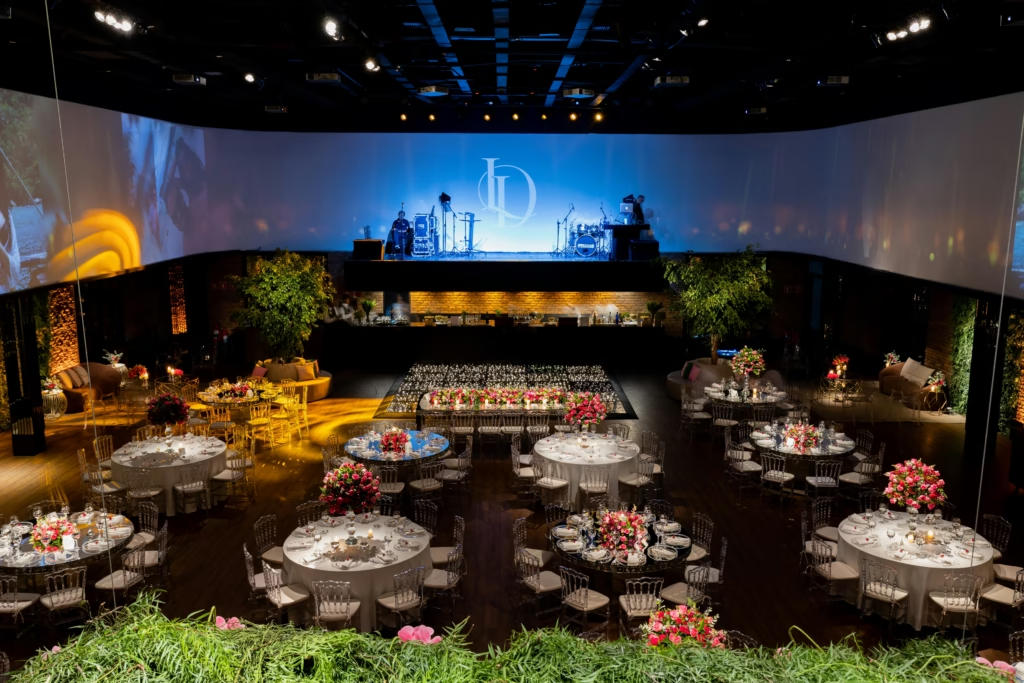
1. Corporate Sales in Hotels: Beyond Room Nights
In India, hotels serve as hubs for business engagement. Especially in metros and Tier-2 business cities, corporate sales is driven by:
- Preferred Corporate Rates (PCR): Strategically negotiated rates for frequent business travelers.
- MICE Business: Banquets, boardrooms, and full-scale conventions booked well in advance (or, increasingly, at the last minute!).
- Long-Stay Contracts: Tech, Pharma, BFSI, and infra clients frequently book stays for 15–60 days, sometimes longer.
- Crew & Bulk Bookings: Airlines, event companies, and production houses require dependable, no-frills, high-volume stays.
To navigate this, the best sales leaders:
- Forecast demand using RevPAR, ARR, and ADR metrics
- Segment accounts by industry, value, and growth potential
- Use CRMs and RFP automation tools to manage seasonal bidding
- Align with ops and F&B to create plug-and-play corporate packages
My advice? – Always sell outcomes, not just offerings — time efficiency, seamless check-ins, loyalty points, high-speed Wi-Fi, safety protocols — these close deals, not decor.
2. Corporate Sales in Resorts: Selling Experience, Not Just Accommodation
Corporate sales in resorts is a different beast altogether. This is where your storytelling, customization, and value-addition acumen come to life.
Clients book resorts for:
- Leadership offsites & CXO retreats
- Employee incentive programs
- Annual sales conferences & strategy meets
- Wellness-based corporate packages (yoga, Ayurveda, digital detox)
The corporate buyer here is often the HR head, admin leader, or CXO, not procurement.
What works?
- Creating curated itineraries: Day 1 strategy session, Day 2 nature trail, Day 3 awards night.
- Plugging in wellness elements: sunrise yoga, healthy menus, spa access.
- Offering hybrid setups: flexible work + leisure stays.
As a leader, I encourage teams to build destination IPs — pitch your resort not as a property but as an experience: “Imagine your top 40 performers brainstorming under Banyan trees and celebrating with a live percussion band by the beach.”
3. Corporate Sales in Travel & Tourism: The Connective Tissue
This is where it all comes together — DMCs (Destination Management Companies), tour operators, and curated B2B travel brands work with corporate houses to deliver end-to-end experiences.
Key verticals:
- Corporate incentive travel
- Global offsites & leadership conclaves
- Festival & season-based holiday packages
- Customized MICE tours with integrated logistics
Here, corporate sales is all about:
- Logistics alignment: air travel, ground transport, visas, insurance.
- Experience design: not just where they go, but why they’ll remember it.
- Sustainability and CSR: planting trees, local cultural immersions, or women-led rural homestays.
Winning in this space requires deep supply chain partnerships, vendor alignment, and razor-sharp itinerary planning. In my experience, Indian corporates increasingly value sustainability, inclusivity, and authenticity in their travel choices — especially post-pandemic.
The Technical Craft of Corporate Sales: What Sets a Leader Apart
A few key principles I live by:
✅ Segment Before You Sell
Each industry behaves differently. IT companies love plug-and-play properties; pharma requires compliance-ready service; startups demand flexibility. Map your leads with psychographic and behavioral filters.
✅ Forecast with Intelligence, Not Assumption
Don’t just look at YoY growth — analyze lead-to-close ratio, booking velocity, and repeat corporate spend by season and market.
✅ Sales and Ops Must Work in Tandem
There’s nothing worse than overpromising and under-delivering. Corporate sales needs daily sync with FOMs, chefs, engineering, and GMs to deliver precision experiences.
✅ Build a CRM That’s a Living Organism
Your CRM should not be a digital graveyard. Update it. Use it. Extract monthly insights. Run closure reports. Track funnel gaps. Coach teams on data hygiene.

The Future of Corporate Sales in Indian Hospitality
I believe the next 3–5 years will transform corporate sales across hotels, resorts, and tourism:
🌐 Hyper-Personalization via AI
From room preferences to meal choices and travel calendars — AI will help preempt needs before a corporate client even checks in.
🌿 Green Contracts & ESG Compliance
Sustainability clauses will become part of every large corporate agreement — hotels must align operations to meet these mandates.
📈 Cross-Portfolio Upselling
Clients who book one property should be nudged to explore sister brands, resorts, and travel experiences. We must connect the dots intelligently.
🧠 Sales Teams = Strategic Advisors
The best corporate sales leaders won’t just take briefs — they’ll co-create solutions with clients, blending hospitality, brand storytelling, and data science.
My Closing Thought: Corporate Sales is the Strategic Soul of Hospitality
Whether you’re running a 100-room city hotel, a 20-acre coastal resort, or a boutique travel company curating experiences — corporate sales is what gives your brand long-term traction. It’s not glamorous, but it’s mission-critical.
As someone who’s closed high-value corporate contracts, handled RFPs from Fortune 500s, sold during low seasons, and turned team retreats into lifelong brand connections — I can say this with confidence:
Corporate sales isn’t about transactions. It’s about building trust, designing experiences, and delivering predictability in an unpredictable industry.
To every hospitality leader reading this: invest in your sales team, invest in your data, and most importantly, invest in understanding your client’s journey — from inquiry to memory!
~ Insiya A.H. Burhanpurwala
Hospitality & Brand Leader | Ex-Business Head – Ilara Hotels & Spa | Founder – Insiya & Co. | Consultant for Food, Travel & Experience Brands
